The Aurora Dune Shawl Free Pattern – A Knitted Desert Mirage

The Aurora Dune Shawl: A Free Knitting Pattern for a Desert Mirage
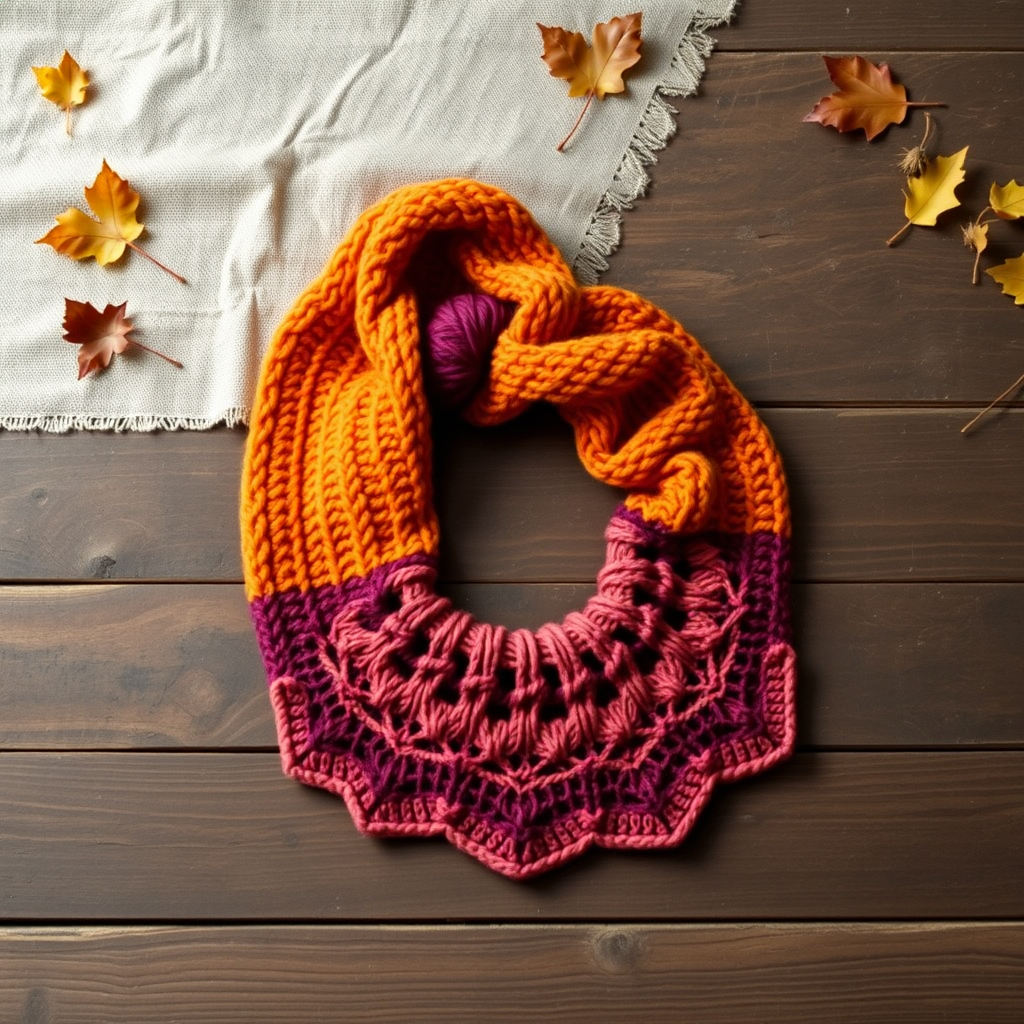
Imagine wrapping yourself in the shifting sands of a twilight desert, where the warm beige of sun-drenched dunes melts into a dusty rose horizon, finally deepening into the mysterious purple of a desert night. This is the magic of the Aurora Dune Shawl—a crescent-shaped knitted masterpiece that combines the simplicity of garter stitch with a dramatic, sculptural ruffle edge. Whether you're a seasoned knitter looking for a satisfying project or a confident beginner ready for a beautiful challenge, this free pattern will guide you through creating a truly modern, wearable work of art. The undulating waves of color and the fluted, eyelet-trimmed edge make this shawl a standout piece in any wardrobe, perfect for cozy evenings or as a striking accessory.
Materials Needed
Before you begin your knitting journey, gather the following materials. The quality of your yarn will greatly affect the drape and feel of your finished shawl, so choose a soft, worsted-weight yarn that you love.
- Yarn: Worsted weight yarn in 3 colors:
- Color A (Dune Sand): Warm beige - 200g
- Color B (Sunset Coral): Dusty rose - 100g
- Color C (Twilight Purple): Deep lavender - 100g
- Needle: US 9 (5.5mm) 32-inch circular knitting needle. The long cable is essential to accommodate the growing number of stitches.
- Notions: Stitch markers (optional, but helpful), tapestry needle for weaving in ends, and blocking mats with pins.
Gauge: 16 stitches and 24 rows = 4 inches in garter stitch (blocked). While gauge is important for size, the shawl is quite forgiving. The key is to maintain consistent tension throughout.
Step-by-Step Instructions
This pattern is worked from the top center (the neck edge) downwards. You'll start with just a few stitches and gradually increase to form the crescent shape. The ruffle edge is created at the very end with a series of increases and decreases. Follow along carefully, and you'll be amazed at the sculptural result.
Special Stitches & Abbreviations
- kfb (knit front and back): Knit into the front of the stitch, then without slipping it off, knit into the back of the same stitch. This increases your stitch count by 1.
- k2tog (knit two together): Insert your right needle through two stitches on the left needle as if to knit, and knit them together. This decreases your stitch count by 1.
- yo (yarn over): Bring the yarn to the front of the work, then over the right needle to the back. This creates an eyelet (hole) and increases the stitch count by 1.
Cast On & Setup
With Color A (Dune Sand), cast on 5 stitches using your preferred method (long-tail cast on works well).
- Row 1 (Right Side): kfb, k3, kfb. (You now have 7 stitches)
- Row 2 (Wrong Side): Knit all stitches.
- Row 3: kfb, k5, kfb. (You now have 9 stitches)
- Row 4: Knit all stitches.
Body of Shawl (Increase Section)
Now you'll continue in garter stitch (knitting every row), working an increase on every right-side row. This creates the gentle crescent curve.
- Row 5 (RS): kfb, knit to the last 2 stitches, kfb, k1. (You now have 11 stitches)
- Row 6 (WS): Knit all stitches.
Repeat Rows 5 and 6, changing colors as follows. Remember to carry the unused yarn up the side of your work to avoid weaving in too many ends, or cut and weave in as you go—whichever you prefer.
- Color A (Dune Sand): Work 20 rows (which is 10 increase rows).
- Color B (Sunset Coral): Switch yarn and work 30 rows (15 increase rows).
- Color C (Twilight Purple): Switch yarn and work 40 rows (20 increase rows).
Check your stitch count: After completing all increase rows, you should have 95 stitches on your needle. (Calculation: 5 initial stitches + (10+15+20 increase rows × 2 stitches per increase row) = 5 + 90 = 95 stitches).
Ruffle Edge (Decrease Section)
Now for the fun part—the dramatic, sculptural ruffle! This is achieved by first decreasing to shape the edge, then working a wavy pattern with eyelets.
First, decrease to shape the edge:
- Row 1 (RS): k2tog, knit to the last 2 stitches, k2tog. (93 stitches)
- Row 2 (WS): Knit all stitches.
- Row 3: k2tog, knit to the last 2 stitches, k2tog. (91 stitches)
- Row 4: Knit all stitches.
- Row 5: k2tog, knit to the last 2 stitches, k2tog. (89 stitches)
- Row 6: Knit all stitches.
Ruffle Wave Pattern
Now, work the following 4-row repeat until you have 5 stitches left on your needle. This pattern creates the beautiful, undulating waves with delicate eyelets.
- Row 1 (RS): k1, (yo, k2tog) repeat to the last 2 stitches, k2. (This maintains your stitch count while creating eyelets).
- Row 2 (WS): Knit all stitches.
- Row 3 (RS): k1, (yo, k2tog) repeat to the last 2 stitches, k2.
- Row 4 (WS): Knit all stitches.
After the last repeat, you will have 5 stitches remaining. Bind off loosely to ensure the ruffle edge remains stretchy and fluid.
Finishing Touches
Weave in all loose ends carefully using your tapestry needle. The most important step for a professional finish is blocking. Gently soak the shawl in lukewarm water with a little wool wash, then squeeze out excess water (do not wring). Lay it flat on a blocking mat, and gently stretch it to shape. Pay special attention to the ruffle edge—open up the waves and pin them down to accentuate the scalloped, fluted look. Allow it to dry completely. The crescent shape will naturally form as it dries, and your Aurora Dune Shawl will be ready to wear!
This pattern is a joy to knit, and the result is a stunning, artistic accessory that captures the serene beauty of desert dunes at sunset. Happy knitting!