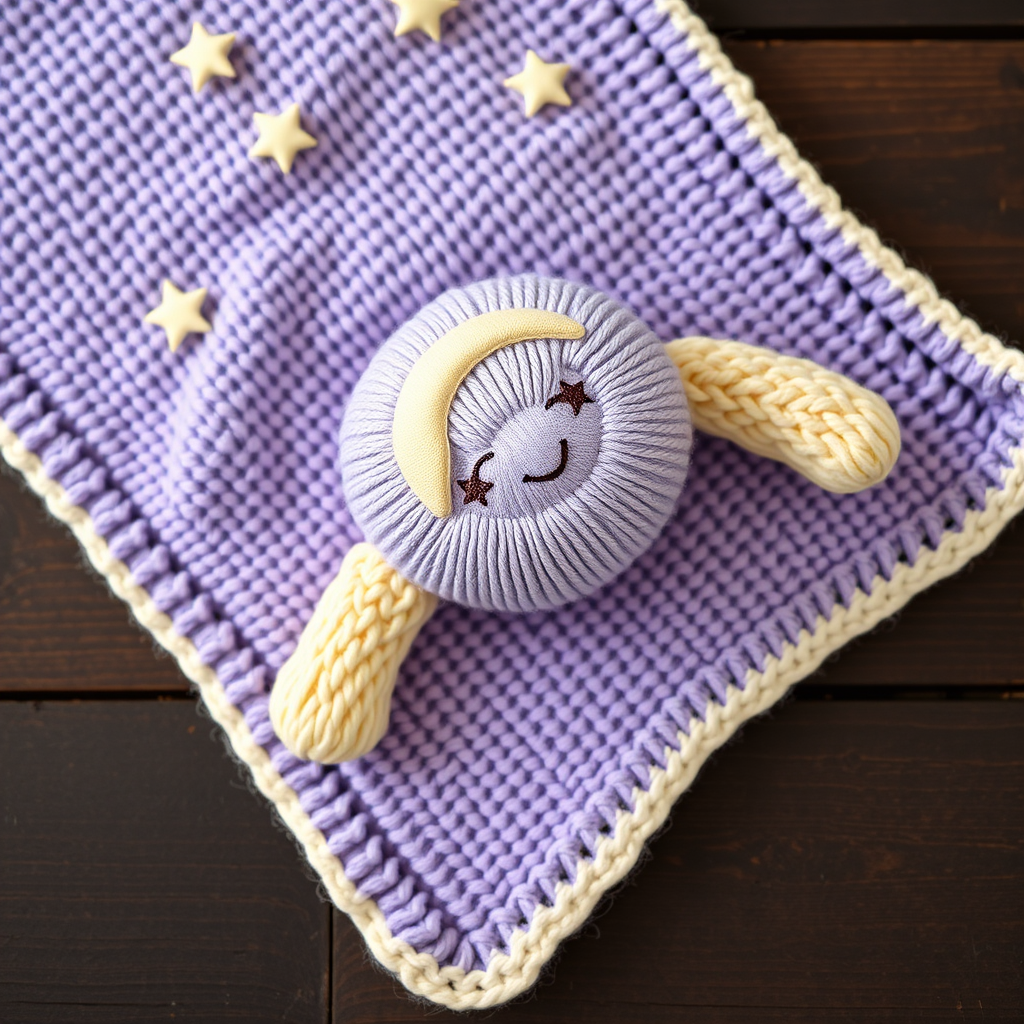
The Gentle Giant Elephant C2C Blanket Free Pattern – A Crocheted Pastel Safari Throw

The Gentle Giant Elephant C2C Blanket Free Pattern – A Crocheted Pastel Safari Throw
Wrap your little one in the softest safari adventure with this corner-to-corner elephant blanket, featuring a gentle giant peeking through a dreamy pastel landscape. This crochet pattern combines the classic C2C technique with a modern, minimalist elephant motif for a truly heirloom-quality piece. Whether you're a seasoned crocheter or a brave beginner ready for a rewarding project, this pattern will guide you through every step to create a stunning, nursery-ready throw that will be treasured for years.
The Corner-to-Corner (C2C) method is perfect for creating pixel-art style images, and this elephant design is both charming and sophisticated. With its soft cream border, dusty rose sky, and sage green grass accents, this blanket is a beautiful blend of calm colors and tactile comfort. Let's dive into this delightful project!
Materials Needed
Before you begin, gather the following materials. Using the specified yarn weight and hook size is crucial to achieving the correct gauge and finished dimensions.
- Yarn: Worsted weight (#4) cotton or acrylic blend in the following colors:
- Main Color (MC): Soft Cream – for the border and background
- Color A (CA): Dusty Rose – for the sky background
- Color B (CB): Sage Green – for the grass
- Color C (CC): Light Butter Yellow – for stars/sun accents
- Color D (CD): Pale Gray – for the elephant's body
- Color E (CE): Charcoal Gray – for the elephant's eye and details
- Crochet Hook: 5.5 mm (I-9) crochet hook
- Gauge: 4 C2C blocks = 4 inches (10 cm) in C2C pattern. Always check your gauge to ensure the correct size.
- Other Tools: Yarn needle for weaving in ends, scissors, and stitch markers (optional but helpful).
Understanding the C2C Technique
This blanket is worked in Corner-to-Corner (C2C) technique, starting from the bottom right corner and increasing diagonally, then decreasing. Each 'block' is a ch-3, 3-dc cluster. Follow the graph below, reading from bottom right to top left. Use the color changes as indicated, carrying yarn along the back or using bobbins for larger sections.
Abbreviations
- ch: chain
- dc: double crochet
- sl st: slip stitch
- MC: Main Color, CA: Color A, etc.
C2C Basics
Master these two fundamental row types, and you'll be able to tackle the entire pattern.
- Increase Row: Ch 6, dc in the 4th ch from the hook and in the next 2 ch (this forms your first block). Turn. For each subsequent block in the row, ch 3, skip 3 dc of the previous block, and work 3 dc in the ch-3 space. At the end of the row, ch 6 and turn for the next increase row.
- Decrease Row: Sl st into the ch-3 space of the last block, then sl st across the top of the last 3 dc. Ch 3, work 3 dc in the next ch-3 space. Continue across the row.
Step-by-Step Instructions
Follow these detailed instructions carefully. The blanket is 40 blocks wide by 40 blocks tall, which will result in an approximate 40-inch square. This is a perfect size for a baby blanket or a small throw.
Graph Instructions & Color Placement
Here is the complete color graph for the 40x40 block blanket. Read the rows from bottom to top, and within each row, from right to left (as you would naturally crochet).
- Rows 1-10 (Increase): Work all blocks in MC (Soft Cream). This forms the bottom right corner of the blanket.
- Rows 11-15 (Increase): MC for the first 10 blocks, then CD (Pale Gray) for the next 5 blocks (this starts the elephant's ear), and MC for the remaining blocks in the row.
- Rows 16-20 (Increase): MC for the first 8 blocks, CD for the next 9 blocks (continuing the ear and starting the head), and MC for the remaining blocks.
- Rows 21-25 (Increase/Straight): MC for the first 6 blocks, CD for the next 13 blocks (head and trunk), CE (Charcoal Gray) for 2 blocks (the eye), and MC for the remaining blocks. Note: At Row 21, you will begin the straight row (increase on one side, decrease on the other) to square off the corner.
- Rows 26-30 (Decrease): MC for the first 5 blocks, CD for the next 15 blocks (trunk and body), and MC for the remaining blocks.
- Rows 31-35 (Decrease): MC for the first 7 blocks, CD for the next 13 blocks (body), and MC for the remaining blocks.
- Rows 36-40 (Decrease): MC for the first 10 blocks, CD for the next 5 blocks (leg), and MC for the remaining blocks.
Background Fill: For all blocks not specified as MC or CD, you will use CA (Dusty Rose) to create the soft sky. Additionally, add a few CB (Sage Green) blocks at the bottom (Rows 36-40) to suggest grass, and scatter a few CC (Light Butter Yellow) blocks throughout the sky area (Rows 11-35) as stars or a sun.
Detailed Row-by-Row Breakdown
To make this even clearer, here is the exact color sequence for each row. Remember, each number represents one C2C block.
Rows 1-10:
Row 1: MC x1
Row 2: MC x2
Row 3: MC x3
Row 4: MC x4
Row 5: MC x5
Row 6: MC x6
Row 7: MC x7
Row 8: MC x8
Row 9: MC x9
Row 10: MC x10
Rows 11-20 (Introducing the Elephant):
Row 11: MC x10, CD x1, MC x0 (Total 11 blocks)
Row 12: MC x10, CD x2 (Total 12 blocks)
Row 13: MC x10, CD x3 (Total 13 blocks)
Row 14: MC x10, CD x4 (Total 14 blocks)
Row 15: MC x10, CD x5 (Total 15 blocks)
Row 16: MC x8, CD x8 (Total 16 blocks)
Row 17: MC x8, CD x9 (Total 17 blocks)
Row 18: MC x8, CD x10 (Total 18 blocks)
Row 19: MC x8, CD x11 (Total 19 blocks)
Row 20: MC x8, CD x12 (Total 20 blocks)
Rows 21-30 (The Face and Trunk):
Row 21: MC x6, CD x13, CE x2 (Total 21 blocks) Start straight row here.
Row 22: MC x6, CD x14, CE x2 (Total 22 blocks)
Row 23: MC x6, CD x15, CE x2 (Total 23 blocks)
Row 24: MC x6, CD x16, CE x2 (Total 24 blocks)
Row 25: MC x6, CD x17, CE x2 (Total 25 blocks)
Row 26: MC x5, CD x20 (Total 25 blocks) Start decreasing.
Row 27: MC x5, CD x19 (Total 24 blocks)
Row 28: MC x5, CD x18 (Total 23 blocks)
Row 29: MC x5, CD x17 (Total 22 blocks)
Row 30: MC x5, CD x16 (Total 21 blocks)
Rows 31-40 (The Body and Leg):
Row 31: MC x7, CD x13 (Total 20 blocks)
Row 32: MC x7, CD x12 (Total 19 blocks)
Row 33: MC x7, CD x11 (Total 18 blocks)
Row 34: MC x7, CD x10 (Total 17 blocks)
Row 35: MC x7, CD x9 (Total 16 blocks)
Row 36: MC x10, CD x5 (Total 15 blocks)
Row 37: MC x10, CD x4 (Total 14 blocks)
Row 38: MC x10, CD x3 (Total 13 blocks)
Row 39: MC x10, CD x2 (Total 12 blocks)
Row 40: MC x10, CD x1 (Total 11 blocks)
Important: As you work, remember to fill in the background with CA (Dusty Rose) for all non-MC/non-CD blocks. For example, in Row 11, you will have MC x10, CD x1, and CA x0 (since it's the edge). In Row 16, you'll have MC x8, CD x8, and CA x0. In Row 21, you'll have MC x6, CD x13, CE x2, and CA x0. For rows with fewer specified blocks, fill the rest with CA. For instance, Row 26: MC x5, CD x20, and CA x0. Row 31: MC x7, CD x13, and CA x0 (since 7+13=20, and the row has 20 blocks).
Color Changes in C2C
When changing colors, complete the last dc of the old color, then pull the new color through the final yarn over. Carry the unused color loosely along the back of the work, or cut and weave in ends for large sections. For this pattern, carrying the CA (Dusty Rose) and MC (Soft Cream) is recommended, but for the elephant's gray and charcoal, you may want to use bobbins to avoid tangling.
Adding the Border
After completing the main body and weaving in all loose ends, it's time to add a beautiful, finished edge.
- Round 1: With MC (Soft Cream), work a single crochet (sc) evenly around the entire edge, working 3 sc in each corner. Join with a slip stitch to the first sc.
- Round 2: Work a double crochet (dc) in each sc around, working 3 dc in each corner. Join with a slip stitch.
- Round 3: Work a single crochet (sc) in each dc around, working 3 sc in each corner. Join and fasten off.
Weave in all remaining ends with your yarn needle. Your Gentle Giant Elephant C2C Blanket is now complete!
Final Touches & Tips for Success
This pattern is a labor of love, but the result is absolutely stunning. Here are a few extra tips to ensure your blanket turns out perfectly:
- Gauge is Key: Always make a small swatch first to check your gauge. If your blocks are too big, try a smaller hook; if too small, try a larger hook.
- Stay Organized: Use separate bobbins or small balls of yarn for the elephant's gray sections to prevent tangling.
- Blocking: After finishing, gently block your blanket to ensure it lies flat and the corners are square. This will also help even out your stitches.
This pastel safari throw is more than just a blanket; it's a keepsake. The gentle elephant, with its floppy ear and curved trunk, will be a comforting companion for your little one. Enjoy the process, and don't hesitate to reach out if you have any questions. Happy crocheting!